How to Choose the Right eTMF System and Vendor
June 28, 2024
Handling a Trial Master File (TMF) can be tough for clinical teams, but it doesn’t have to be. Old systems with outdated file sharing methods or homemade systems with spreadsheets or paper can make managing sensitive trial data risky. Over the past decade, electronic Trial Master File (eTMF) systems have helped many biopharma companies and CROs handle the growing complexity of clinical trial documents. However, not all eTMF systems have the flexibility and features needed for modern trials.
So, how can sponsors, CROs, and other key stakeholders decide if they need an eTMF? And once they decide, how can they choose the right system? Knowing what questions to ask is crucial to ensure the eTMF system you pick is thorough and compliant. We will discuss the important questions to consider when evaluating an eTMF system and vendor.
What is an eTMF System?
An electronic trial master file (eTMF) system is a digital way to collect and manage important trial documents that are part of the TMF record.
eTMF systems do more than just replace paper processes with digital ones. They help manage the TMF, ensure proper evaluation of clinical trial conduct, maintain the integrity of trial data, and comply with Good Clinical Practices (GCP). The right eTMF system should allow real-time management of essential documents, centralize your data for easy collaboration, and ensure your TMF meets regulatory standards.
What is Driving the Adoption of eTMF Systems?
Clinical teams face increasing complexity due to decentralization, globalization, more data sources, and dispersed teams. These issues, combined with traditional challenges like improving ROI, lead to delays, isolated teams, and risks to data integrity and patient safety.
eTMF systems help manage this complexity with automated workflows, real-time access to key documents, collaborative dashboards, and built-in compliance features that reduce audit risks. The move from paper to digital is driving positive changes in the industry as more organizations optimize their internal processes.
Who Benefits from an eTMF System?
While managing essential documents manually or with homemade solutions can work temporarily, as trials grow in size and complexity, manual efforts become more difficult and expensive. A modern eTMF system automates document management and supports remote workflows with pre-configured templates, dashboards, and audit trails that protect data integrity and ensure regulatory compliance.
As studies evolve and expand, an eTMF system can adapt and scale in ways that legacy or homemade systems cannot. Organizations will benefit the most from switching to an eTMF system if they:
- Have a growing clinical trial pipeline.
- Plan to increase the number or size of their studies.
- Are preparing for an upcoming audit or inspection.
- Expect growth and want to plan proactively.
Steps to Create a Business Case for an eTMF System
To determine if your organization would benefit from a modern eTMF, start by evaluating your internal people, processes, and existing systems:
- Calculate Current Costs: Assess the expenses related to your current TMF document handling and storage.
- Assess Time Spent: Determine how much time you spend on TMF planning before starting a study.
- Evaluate Inspection Readiness: Analyze the time required for TMF audits and inspections.
- Set Efficiency Goals: Define operational efficiency goals for your TMF, such as implementation time and time to value.
Mapping out existing TMF processes is a tedious but valuable step in building a business case for a modern eTMF system. Once completed, you can start the RFP process where the eTMF vendor can align your processes with their system and provide a realistic understanding of timelines and total cost of ownership.
Key Stakeholders in Deciding Which eTMF Platform to Use
Many trial stakeholders interact with the TMF during a study, including sponsors, investigators, and CROs. Therefore, evaluating an eTMF system should involve a team rather than just one person. Depending on your organization’s size, consider including individuals from these teams:
- Clinical Operations: Reviews the operational efficiency of the eTMF.
- IT: Evaluates system integrations and reviews vendor Service Level Agreements (SLAs).
- Data Management: Ensures data is safely uploaded, stored, and managed within the eTMF.
- Quality: Ensures data integrity is maintained throughout the trial.
- Finance: Reviews pricing and contracts; determines ROI and total cost of ownership.
- CRO (if applicable): Discusses requirements for managing the eTMF.
Each stakeholder should evaluate how the eTMF will impact their area, considering existing people, processes, and systems. Also, consider the amount of training needed to onboard each team to the eTMF system.
Key Features to Consider When Choosing an eTMF System
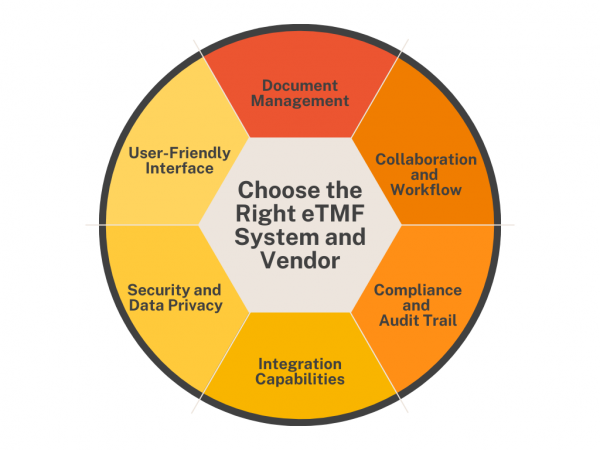
When selecting an electronic Trial Master File (eTMF) system, it’s essential to look for features that ensure efficient, secure, and compliant document management. Here are the key features to consider:
Document Management
- Comprehensive document organization
- Version control
- Metadata management
- Efficient search functions
- Support for various document types (PDFs, Word documents, scanned images)
Collaboration and Workflow
- Real-time document sharing
- Commenting and task assignments
- Workflow management to track and monitor document review and approval processes
Compliance and Audit Trail
- Robust audit trail functionalities to log and trace all actions, modifications, and access
- Compliance with regulatory guidelines (e.g., 21 CFR Part 11)
Integration Capabilities
- Ability to integrate with other clinical trial software (e.g., CTMS, EDC systems)
- Streamlined data exchange to enhance overall trial management efficiency
Security and Data Privacy
- Strong security measures (user access controls, encryption, data backup protocols)
- Compliance with data privacy regulations (e.g., GDPR)
User-Friendly Interface
- Intuitive and easy navigation
- Simple document retrieval and data entry
- Training and support resources to help users maximize the system’s potential
FAQ
What is an eTMF system, and why is it important?
An eTMF system is a digital tool for managing clinical trial documents, ensuring compliance, improving data integrity, and enhancing collaboration among stakeholders.
What are the key features to look for in an eTMF system?
Key features include robust document management, real-time collaboration tools, strong compliance capabilities, integration with other systems, security measures, and an intuitive user interface.
How can an eTMF system improve clinical trial management?
It improves efficiency by automating processes, enhances collaboration, ensures compliance with regulations, strengthens data integrity, and streamlines overall trial management.
Who should be involved in selecting an eTMF system?
Stakeholders such as Clinical Operations, IT, Data Management, Quality Assurance, Finance, and if applicable, CROs, should be involved to evaluate operational needs and system capabilities.
How does an eTMF system handle document version control?
An eTMF system manages document version control by allowing users to track and manage different versions of documents, ensuring that the most current version is easily accessible while maintaining a record of changes.
What types of documents can be managed with an eTMF system?
An eTMF system can manage various types of documents critical to clinical trials, including protocols, investigator brochures, informed consent forms, regulatory submissions, monitoring reports, and adverse event documentation.
What should organizations consider when transitioning from paper-based TMFs to an eTMF system?
Organizations should consider factors such as data migration, training needs for users, system validation requirements, integration with existing systems, and ensuring compliance with regulatory guidelines during the transition.
How does an eTMF system support regulatory compliance?
An eTMF system supports regulatory compliance by maintaining an audit trail of document actions, ensuring document integrity, providing secure access controls, and adhering to regulatory requirements such as 21 CFR Part 11 and GDPR.
What role does user training play in successfully implementing an eTMF system?
User training is crucial for successful eTMF system implementation to ensure that stakeholders understand system functionalities, document handling processes, compliance requirements, and how to effectively use the system for their roles.
Can an eTMF system integrate with other clinical trial software?
Yes, an eTMF system can integrate with other clinical trial software such as Clinical Trial Management Systems (CTMS), Electronic Data Capture (EDC) systems, and regulatory submission platforms to streamline data exchange and enhance overall trial management efficiency.