Immutep Selects Flex Databases eTMF to Improve Oversight and Compliance
March 10, 2026
To learn more about the reasons behind this decision, we asked Tom Apelt, IT Manager at Immutep GmbH, to share his perspective on selecting Flex Databases and the experience of implementing the eTMF system.
Before implementing Flex Databases eTMF, what were the main challenges you experienced in TMF management?
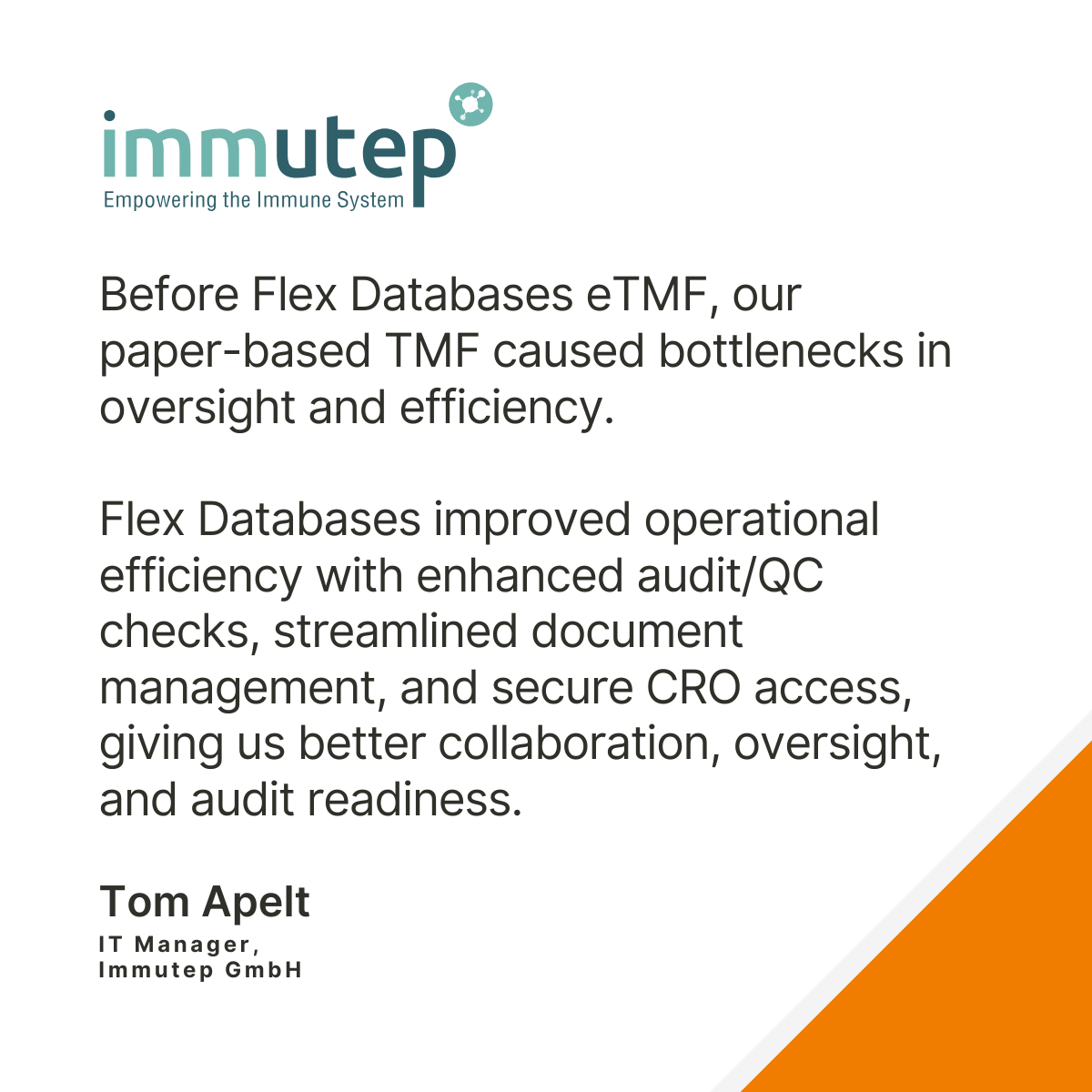
Prior to implementing Flex Databases eTMF, our primary hurdle was the reliance on a legacy paper-based system. This created significant bottlenecks in two key areas: oversight and efficiency. With a physical TMF, we lacked real-time visibility into the status of our documents; we often didn’t know a document was missing or expired until we manually checked the binders, which made audit readiness a constant source of stress.
What were the key criteria you evaluated when selecting an eTMF solution and vendor?
Our selection process focused primarily on two areas. First, we required Regulatory Compliance with eTMF filing regulations, ensuring the system maintained an immutable audit trail and inspection readiness (21 CFR Part 11 and DIA Model). Second, we evaluated the Total Cost of Ownership and Pricing, seeking a transparent model free of hidden fees for storage and long-term archiving to maintain financial predictability.
How would you describe your onboarding and implementation experience?
Overall, our onboarding experience with Flex Databases was positive, and we felt well-supported by the vendor team. However, we initially underestimated the scope of the implementation. The process of transitioning from our existing systems to FlexDB was quite extensive, requiring significant internal time. Consequently, the acclimatization phase for our team to fully integrate the new system and its digital workflows into daily practice took longer than originally anticipated.
How has Flex Database eTMF improved efficiency, collaboration, and oversight across your studies?
Enhanced TMF Audit/QC check functionality significantly improved operational efficiency and improved direct and targeted communication regarding specific document corrections. Processes around document management, QC, and completeness checks are more streamlined.
How does the system help when working with external partners, such as CROs?
For a single project we gave access to certain members from a CRO. The system facilitates secure, controlled role-based access for CROs, establishing a basis for effective file sharing. This significantly improved sponsor oversight into CRO activities.
What advice would you give to other sponsors evaluating eTMF solutions?
We would recommend to prioritize scalability and seamless TMF Reference Model implementation. Ensure robust access right management (even at the folder level), comprehensive audit trail availability, and validated documentation. Robust export functionality is also critical for regulatory requirements and transfers.