Challenges of pharmacovigilance automation
October 15, 2021
The development of information technology is significantly ahead of the development of regulatory and other legislation. Despite the obvious benefits of introducing new technologies in electronic systems for pharmacovigilance, it is necessary to consider the difficulties that a company will face:
Validation and audits completion
- New approaches need to be developed to ensure quality, pass user acceptance testing, provide evidence of the validated status of the electronic system during an audit, and that the company has full control over its electronic system, regardless of the level and method of automation used in it.
Personal data management
- It is necessary that legislation on the protection of personal data (for example, GDPR in Europe) is strictly observed in relation to new systems
Personnel training, possible changes in the organizational structure of the company
- The introduction of new technologies will require new competencies from the staff of the pharmacovigilance and quality assurance departments
- The introduction of new technologies may require company restructuring and additional resources
When we developed the Pharmacovigilance module, we considered all possible difficulties and propose the following solutions:
- Flex Databases system is validated, we provide clients with a package of validation documents to prove the status of the system, as well as assistance in passing user acceptance testing
- We strictly comply with the legislation on personal data and comply with all international and local regulations
- For a painless and effective start of work with our system, during the implementation of the module, Flex Databases product specialists conduct detailed training on working with the system for employees of the client company
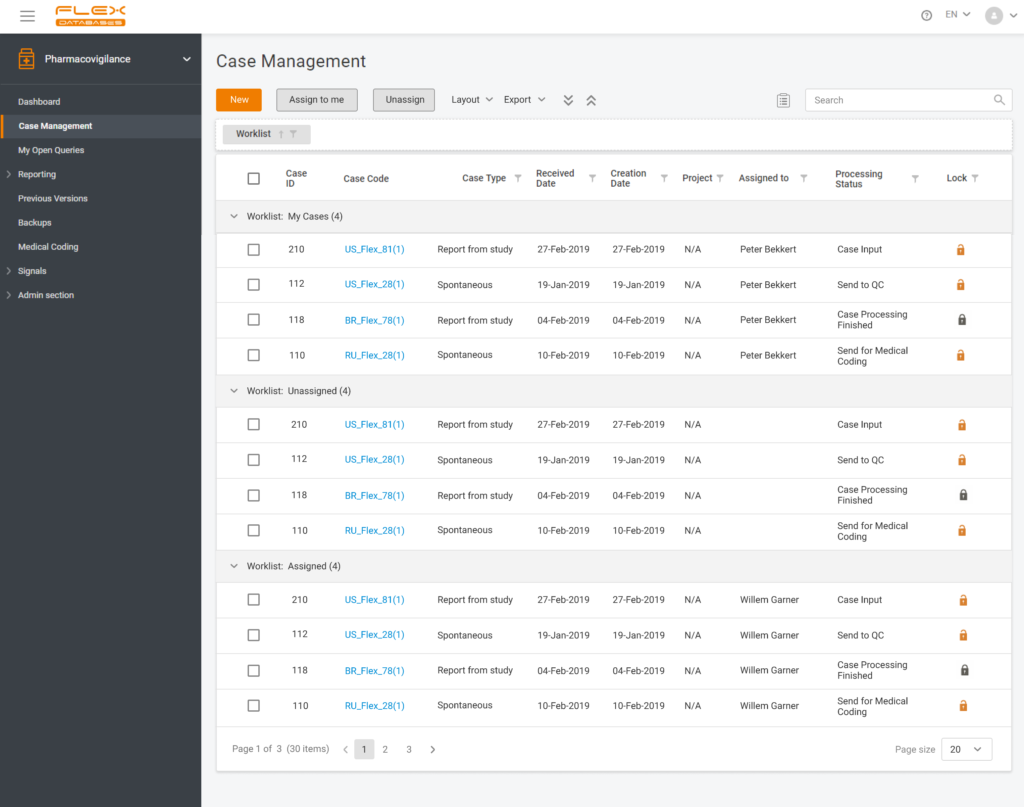
The entire pharmacovigilance process, from receiving the message to reporting and identifying safety signals, can be automated, thereby limiting the amount of human intervention that will still be required for exception handling, quality assurance, and analysis. Usage of automation is costly, but it will reduce data-processing costs, eliminate the potential for human error, and improve data quality and accuracy.
If you are interested in pharmacovigilance automation and want to learn more about the Flex Databases system – write to us at bd@flexdatabases.com or send a request for a demo through the form in the header of the page.